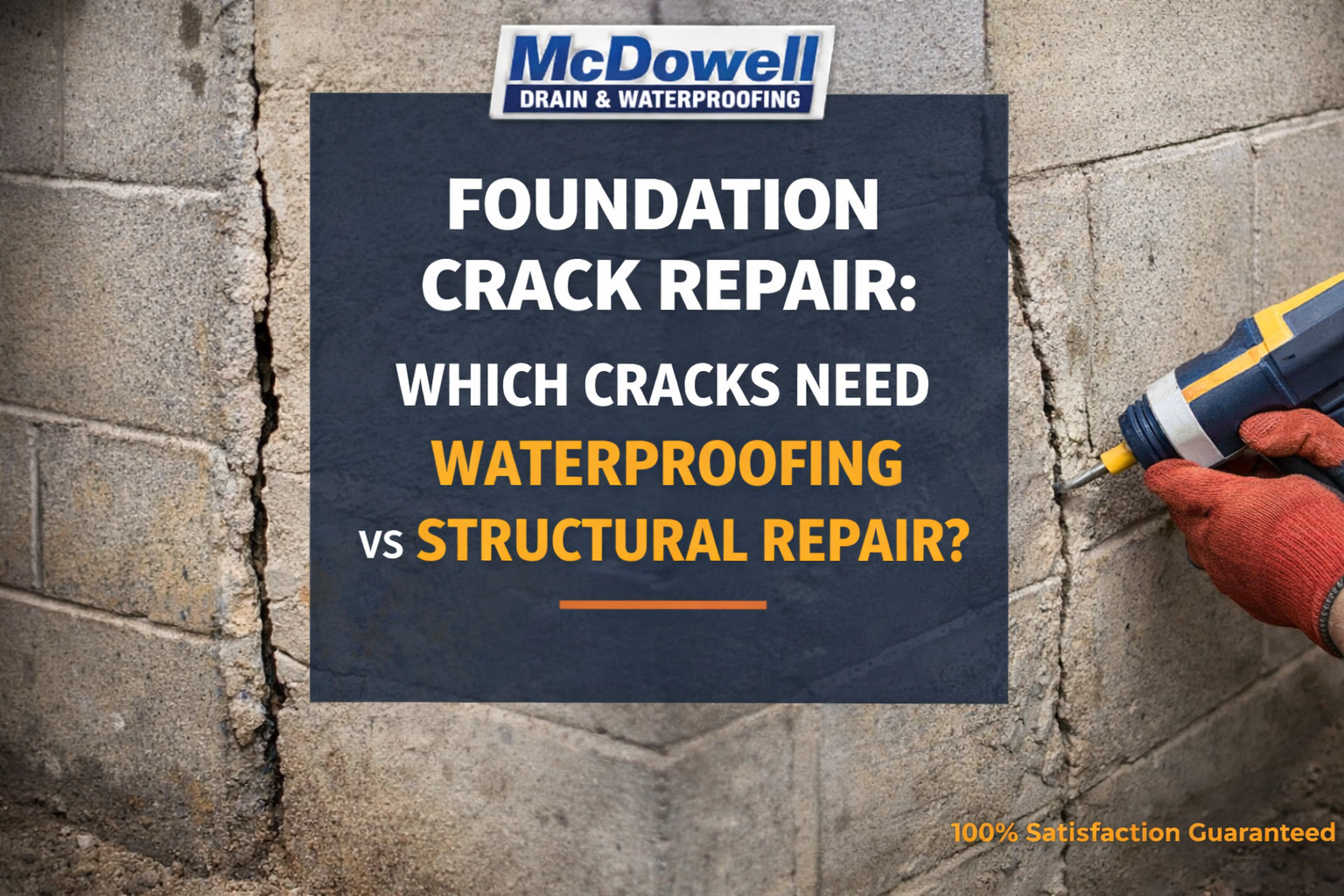
A crack in your foundation can be either a small waterproofing issue… or the first warning sign of structural movement. The problem is that many cracks look similar to homeowners, especially when they’re painted over, hidden behind insulation, or only show up after heavy rain or snowmelt.
At McDowell Drain & Waterproofing, we approach foundation cracks the way experienced waterproofers and drainage pros should: find the cause, measure the risk, then choose the repair that actually solves the problem—not just something that looks good for a few weeks. This guide breaks down the most common crack types, what they usually mean, and how to know whether you need waterproofing-focused crack repair or structural repair.
Why foundation cracks happen?
Most cracks form because of one (or a mix) of these reasons:
- Concrete shrinkage as it cures (common in newer foundations)
- Water pressure outside the wall (hydrostatic pressure) pushing moisture in
- Soil movement from freeze–thaw, clay expansion/contraction, or poor grading
- Drainage problems like clogged/failed weeping tile, short downspouts, negative slope
- Settlement when parts of the home sink slightly over time
- Structural stress from lateral pressure, poor backfill, or long-term water saturation
The key point: a crack is a symptom. The right fix depends on whether the crack is mainly letting water in, or whether it indicates the foundation is being pushed, pulled, or shifting.
Step 1: Identify the crack type
1) Vertical cracks (up-and-down)
Most common. Often waterproofing-related.
- Usually caused by shrinkage or minor settlement
- Can still leak, especially during heavy rain
- Risk increases if it’s widening, damp, or repeatedly leaking
Usually needs: crack repair + waterproofing measures (depending on water source)
2) Diagonal cracks (slanted)
Often settlement-related. Can be waterproofing or structural depending on severity.
- If small and stable: often manageable with waterproofing repair
- If widening or paired with other symptoms: can indicate movement
Usually needs: inspection + likely crack repair; sometimes structural assessment
3) Horizontal cracks (sideways)
This is the one that gets attention—because it often signals structural pressure.
- Frequently caused by lateral soil pressure
- Can be worsened by waterlogged soil outside the wall
- May appear with bowing walls or inward movement
Often needs: structural repair + fixing drainage/water pressure (both matter)
4) Stair-step cracks (in block/brick foundations)
Common in older homes with block foundations.
- Can be settlement, water pressure, or both
- Often allows water intrusion through multiple joints
Usually needs: waterproofing repair; sometimes reinforcement depending on movement
Step 2: Decide if it’s a waterproofing crack or structural crack (the “which category?” section)
Cracks that typically need waterproofing-focused repair
These cracks are often stable (not actively moving) but allow water in.
You’re likely in waterproofing territory if:
- Crack is vertical or slight diagonal
- Width is small and not rapidly changing
- You see dampness, seepage, staining, or efflorescence (white chalky deposits)
- Leaking happens after rainfall, snow melt, or when gutters overflow
- Basement smells musty, but walls aren’t bowing
What McDowell usually does here (depending on the situation):
- Foundation crack injection (where appropriate)
- Interior drainage solutions if water pressure is persistent
- Exterior waterproofing if the outside conditions demand it
- Downspout & grading corrections so the crack doesn’t become a repeat customer
Cracks that are more likely structural (or require structural attention)
Structural cracks often indicate the wall is under stress or moving.
You’re more likely in structural territory if:
- Crack is horizontal
- Wall shows bowing, bulging, or inward displacement
- Crack is widening over time
- Doors stick, floors slope, or you notice new gaps at trim/frames
- You see multiple cracks in the same area
- The crack is paired with significant water saturation outside (constant wet soil)
Important: Even structural cracks usually have a water component. If you reinforce without addressing water pressure and drainage, you’re basically putting a seatbelt on a car that’s still sliding on ice.
Step 3: The “don’t guess” checks homeowners can do safely
You don’t need special tools to do a basic first check:
- Look for water patterns
- Is it wet only after storms?
- Is it always damp in one corner?
- Do you see peeling paint, rust marks, or white deposits?
- Check outside drainage
- Downspouts: do they dump water right beside the foundation?
- Soil slope: does the ground slope toward the house?
- Gutters: overflowing or clogged?
- Monitor for movement
- Take a photo with a coin for scale
- Re-check in 30–60 days (or after major storms)
- If it’s changing fast, treat it seriously
- Note the crack location
- Near basement windows? Corners? Mid-wall?
- Corners and mid-wall cracks can have different causes
Safety note: Avoid DIY patching with surface sealants as a “solution.” It can hide symptoms while water continues to travel behind the wall—leading to mold, rot, or worse damage later.
Crack repair options explained
1) Crack injection (interior)
A common solution for leaking vertical/diagonal cracks in poured concrete.
Best for:
- Narrow cracks with water seepage
- Stable cracks (not moving significantly)
- When the goal is sealing the water pathway
Not best for:
- Horizontal cracks with wall movement
- Issues caused by ongoing water pressure with no drainage plan
2) Interior waterproofing / drainage systems
Think of this as a controlled way to manage water when outside pressure is high.
Best for:
- Recurring seepage at floor-wall joints
- Situations where exterior excavation isn’t practical
- Basements that need long-term water management
3) Exterior waterproofing (excavation + membrane)
This deals with water where it starts: outside the foundation.
Best for:
- Chronic leaking, especially after storms
- When the exterior wall has obvious exposure issues
- Cracks paired with exterior drainage failure or saturated soil
4) Structural reinforcement (when needed)
When the wall is showing stress or displacement, reinforcement may be required.
Best for:
- Horizontal cracking
- Bowing/bulging foundation walls
- Long-term lateral pressure problems
Critical: Reinforcement is strongest when combined with water/drainage correction.
“Which cracks are urgent?” A quick risk guide
Call for inspection sooner (high priority) if:
- Horizontal crack appears
- Wall is bowing or visibly shifting
- Crack is widening quickly
- You have repeat flooding or water pooling at the foundation
- You see multiple cracks forming in a short time
Still worth fixing (but usually less urgent) if:
- One small vertical crack with occasional dampness
- Hairline shrinkage crack with no water signs (still monitor it)
Why fixing the cause matters as much as fixing the crack
The biggest reason crack repairs fail isn’t “bad materials.” It’s because the water and pressure conditions weren’t corrected.
If your downspouts dump water beside the foundation, or your grading slopes inward, or your weeping tile isn’t doing its job—then the crack is just the messenger. Shoot the messenger, and the message keeps coming.
McDowell’s approach is simple: repair the crack + reduce the conditions that created it. That’s how you prevent repeat leaks and protect your foundation long-term.
Need clarity? Get the crack diagnosed before choosing the wrong fix
If you’re unsure whether your foundation crack needs waterproofing crack repair or structural repair, the smartest move is an inspection that looks at crack type, water behavior, and exterior drainage conditions—not just the crack itself.
McDowell Drain & Waterproofing helps homeowners make the right call the first time, with solutions that are built for real-world Niagara conditions: heavy rains, freeze–thaw cycles, older foundations, and everything in between.